Vernal Pool Study - Suffield High School Herpetology Club
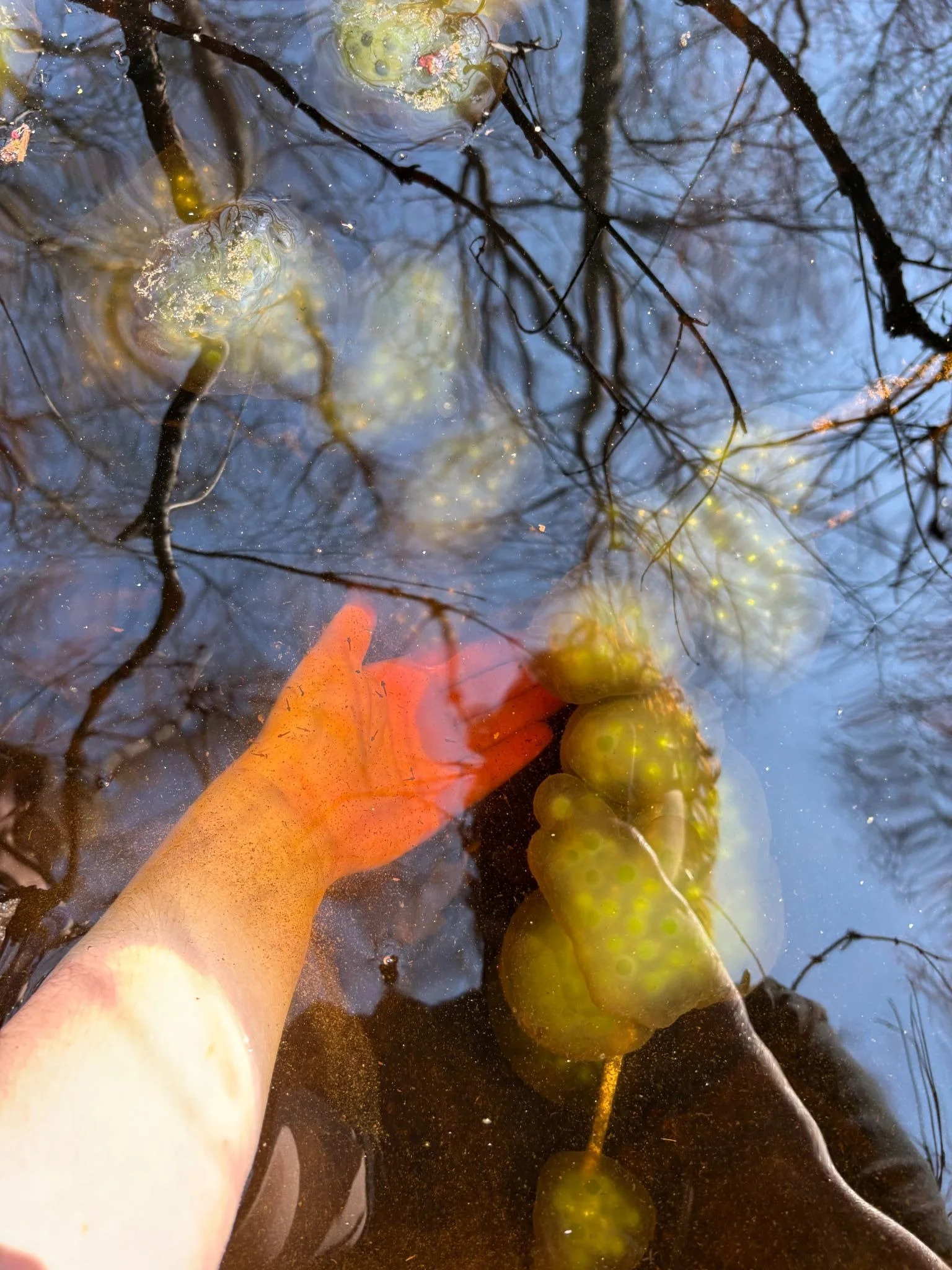
Suffield High School's Herpetology Club designed and carried out a study to learn more about the amphibians in the Outdoor Learning Lab. The Herpetology club obtained a research grant from the Suffield Land Conservancy in order to purchase materials for the study. The Herpetology club held weekly meetings where they counted the number of egg masses from multiple amphibian species. The survey found a distinct lack of Jefferson salamander egg masses in the selected vernal pool, but a large quantity of wood frog and spotted salamander masses.
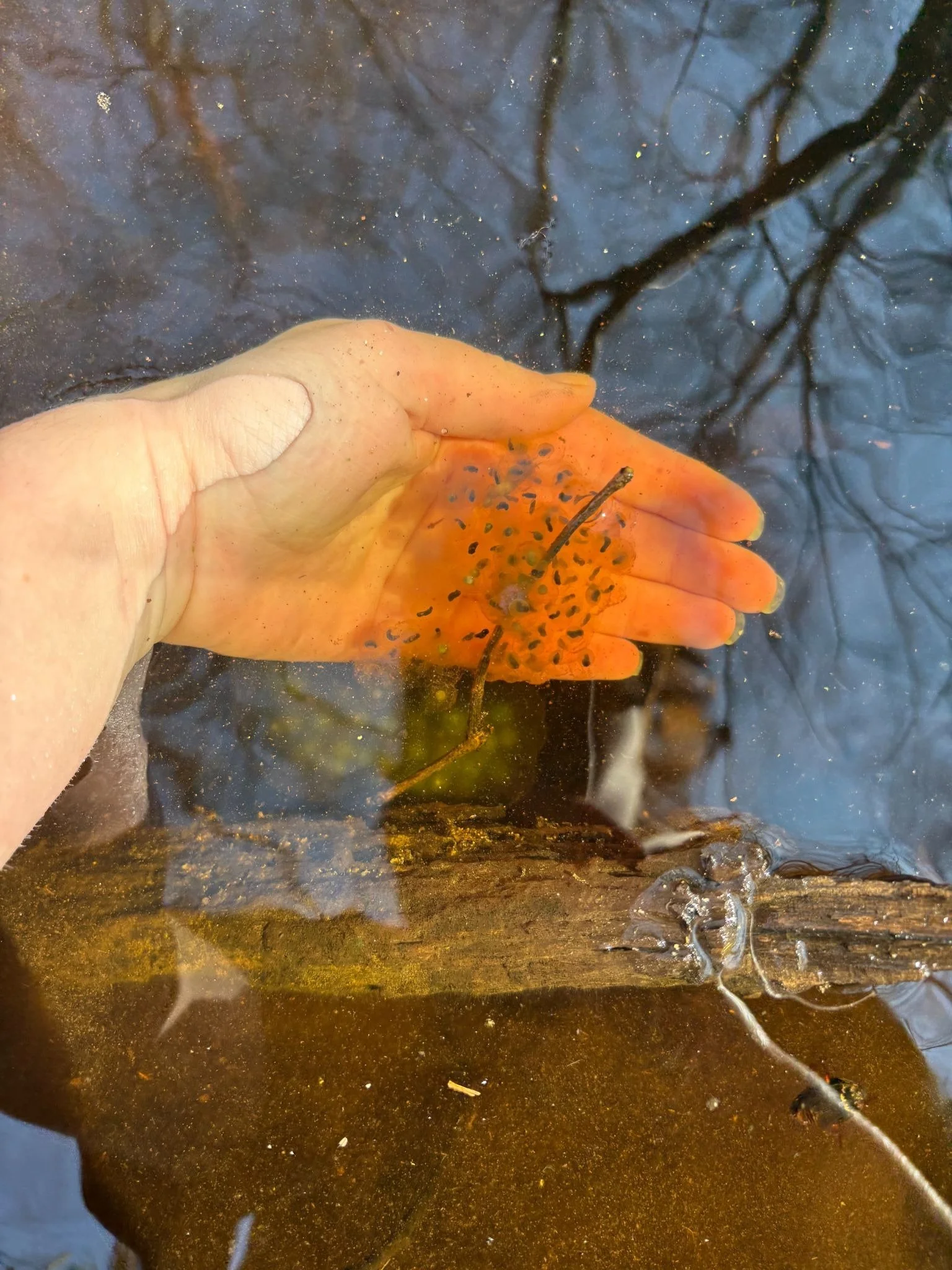
Vernal pools are depressions in the ground that temporarily fill up with water during spring and winter. The water will dry up during mid-summer to fall, preventing major predators like fish from living in the pools. This lack of predators makes vernal pools vital breeding grounds for insects, amphibians, and crustaceans. Amphibians such as Wood Frogs, Green Frogs, Spotted Salamanders, Jefferson Salamanders, and American toad can be seen in the area surrounding vernal pools. Most amphibians will migrate towards vernal pools in early spring after a period of warm nights and regular rainfall. Those amphibians will breed during early spring and lay egg masses which then develop over the course of the spring. After hatching and maturing into juveniles, amphibians will then move back out into the surrounding area as the vernal pool will dry up soon after. The fragile nature of vernal pools makes them susceptible to pollution which poses a major threat to vulnerable populations. In order to gain a better understanding of the populations near the high school, the Herpetology club chose to conduct a survey on the breeding populations of three species; the Wood Frog, the Spotted Salamander, and the Jefferson Salamander.
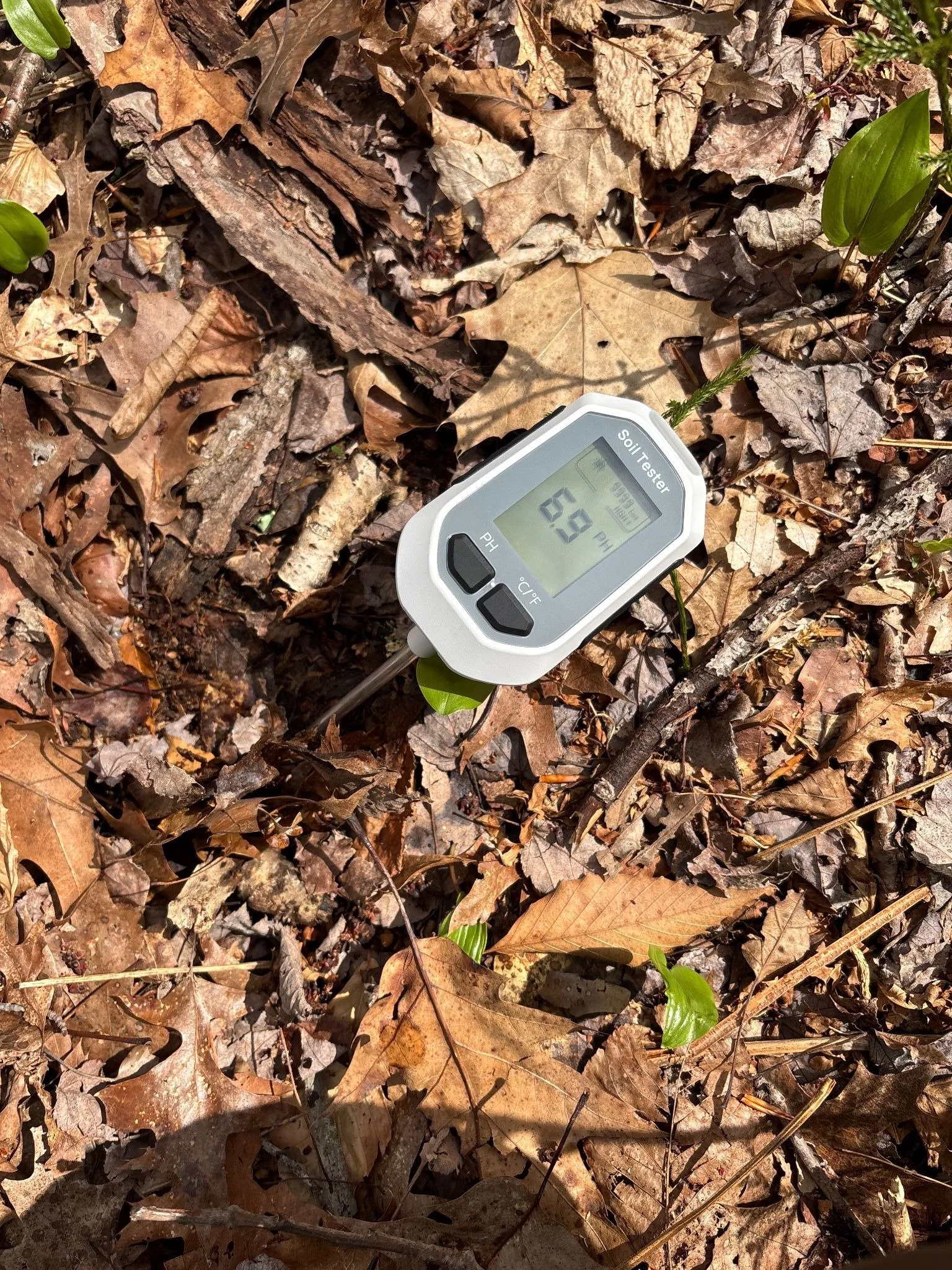
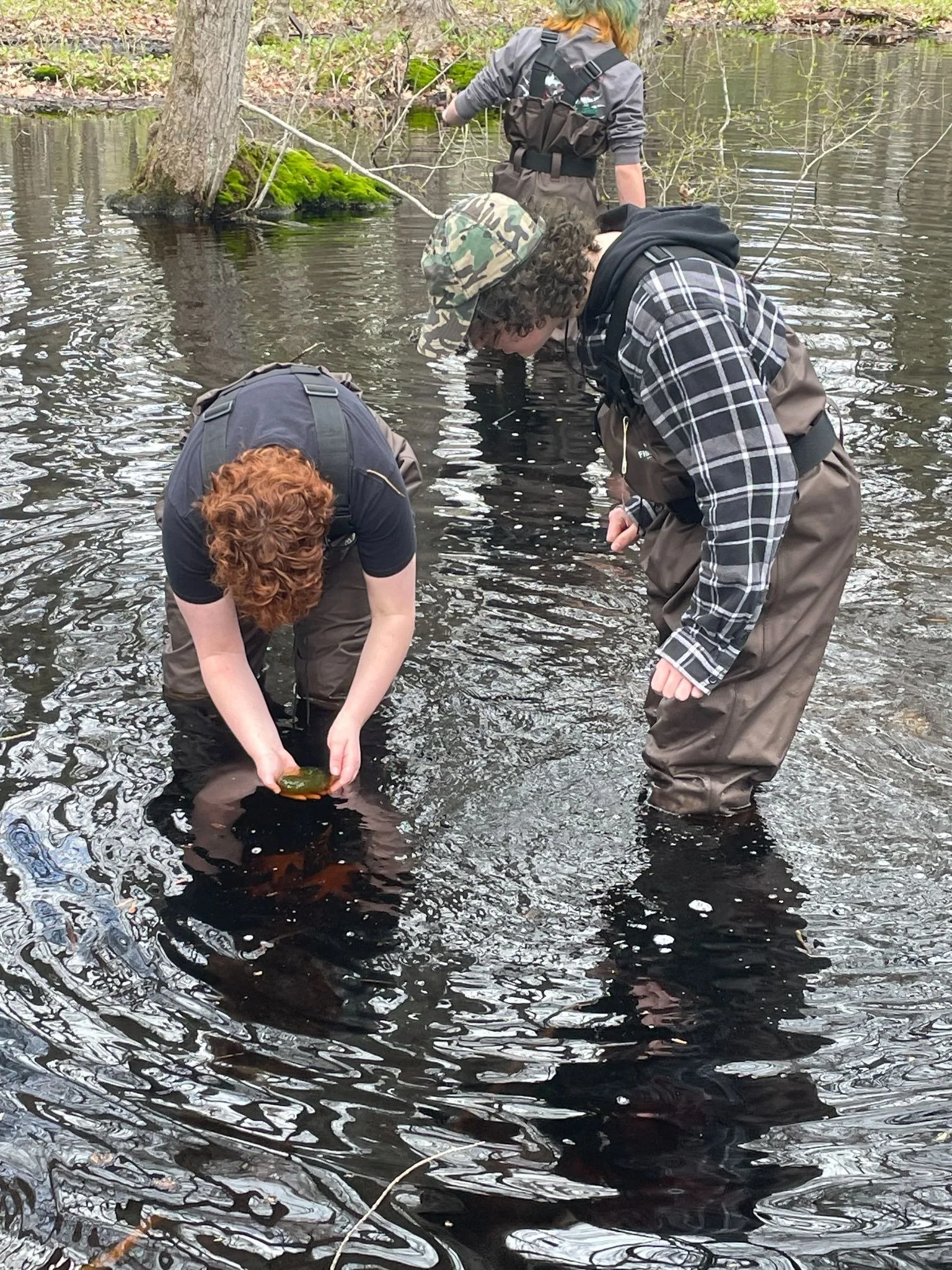
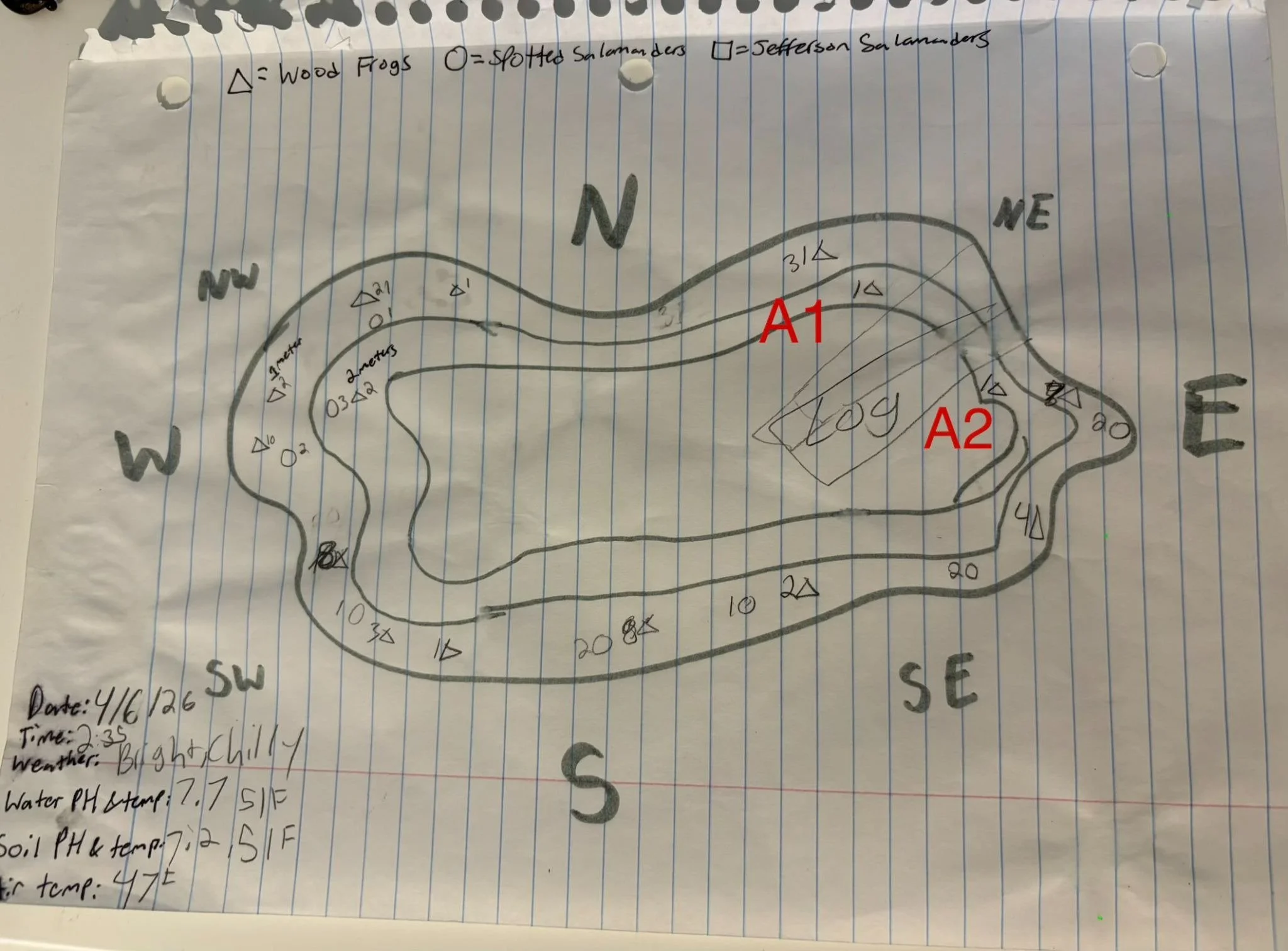
The club’s grant, from the Suffield Land Conservancy, was used to purchase chest waders and a combination ph/temperature probes. The waders were used throughout the study to allow club members to get a close up view and more accurate count of the egg masses. Club members would use the thermometers to record the water and soil temp as well as the respective pH of both. Each meeting, the Herpetology Club sent between 2-4 club members into the vernal pool. The members wore the chest waders and positioned themselves either 1 meter in or 3 meters in. The members were spaced out to ensure an accurate count. Members would slowly walk laps around the pool, counting each egg mass. They would then relay the data (the number, species, and location) to the two record keepers. The record keepers used a map that showed the vernal pool, the 1 and 3 meter areas, and major landmarks.
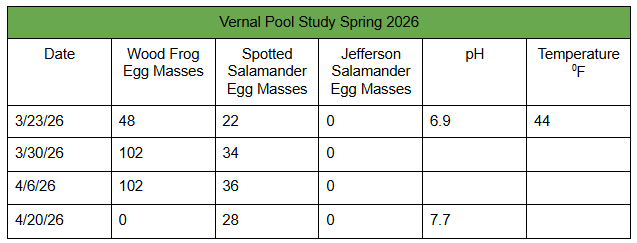
Over the course of four trips, Herpetology club members recorded the number of egg masses found in the vernal pool. The first excursion on 3/23/26 and turned up 48 wood frog egg masses, 22 spotted salamander masses, and no Jefferson salamander masses. The next meeting -- 3/30/26 -- counted 102 wood frog egg masses and 34 spotted salamander egg masses, and 0 Jefferson masses. The third survey -- 4/6/26 -- turned up 102 wood frog egg masses, 36 spotted salamander masses, and 0 Jefferson salamanders. The members on the final visit to the vernal pool on 4/20/26 recorded 0 wood frog egg masses, 28 spotted salamander egg masses, and 0 Jefferson salamanders. Each visit to the pool showed steady growth in the pH, ranging from 6.9 to 7.7. Throughout the month of the study, water and air temperature both increase gradually, with the coldest water temps being 44°F on 3/23/26. A large group of wood frog egg masses -- reaching a peak of 31 separate masses -- were consistently seen in the north east section of the pool, depicted as A1 on diagram 1. A smaller collection of wood frog and spotted salamander masses are seen at A2 on the same diagram.
This study served to teach Herpetology Club members how to conduct a scientific study and provided them with information on what species use the vernal pool to breed. The data collected could be used by conservationists or researchers looking to observe salamanders in Connecticut wetlands. While the data should be interpreted with caution due to the multiple limitations placed on the survey, it can serve as a baseline for future studies and conservation attempts.
The study conducted by the Herpetology Club found clear evidence of Spotted Salamanders and Wood Frogs using the vernal pool as a breeding ground. Egg masses were recorded over the course of the amphibian breeding season in order to identify what species use the pool for that purpose. However, no Jefferson egg masses or larvae were recorded, despite the fact that adults and juveniles of this species can be seen surrounding the pool. A potential limitation of the study was a lack of strict regulations on variables like the map used to record data and the location of water and soil pH and temperature collection. It is also possible the members may have missed some egg masses during the count or simply not been in the right time frame to see Jefferson egg masses.